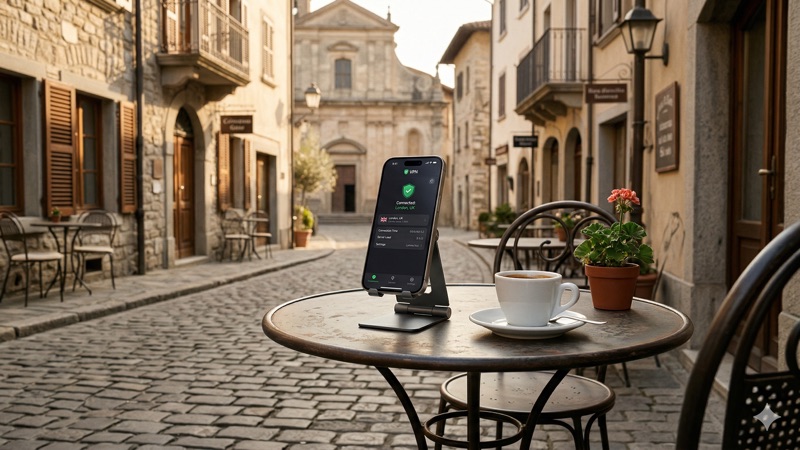
Imagine you’re sitting in a café in Manchester, catching up on emails over public Wi-Fi. You log into your bank, check a few personal messages, and maybe browse the news. Everything feels normal — but behind the scenes, your internet activity could be logged, stored, and potentially accessed by third parties. If you live in the UK, this isn’t a hypothetical scenario. Finding the best VPN for UK use has become a practical step for anyone who values their digital privacy, wants to access content securely, or simply doesn’t like the idea of their browsing history being stored for years without their consent.
The United Kingdom has some of the most extensive surveillance legislation in the Western world. That’s not fearmongering — it’s a matter of public record. In this guide, we’ll break down why a VPN matters specifically for people living in or connected to the UK, which providers stand out in 2026, and how to choose one that genuinely fits your needs.
Why Do UK Residents Need a VPN in 2026?
You might think VPNs are only for tech enthusiasts or people doing something shady. The reality is far more mundane — and far more important. In the UK, there are several everyday reasons why millions of people now use a VPN.
Privacy Under the Investigatory Powers Act
The UK’s Investigatory Powers Act 2016, often called the “Snooper’s Charter,” requires internet service providers (ISPs) to retain records of every website you visit for at least 12 months. These Internet Connection Records (ICRs) can be accessed by a wide range of government bodies — not just intelligence agencies, but also organisations like the Food Standards Agency and the Department for Work and Pensions.
This means your ISP keeps a log showing that you visited a particular health forum, a legal advice site, or a political organisation’s page — and that log is stored for a year. A VPN encrypts your internet traffic before it reaches your ISP, so they can see that you’re connected to a VPN server but not what you’re actually doing online.
It’s worth being honest here: a VPN doesn’t make you invisible. It shifts trust from your ISP to your VPN provider. That’s why choosing a provider with a verified no-logs policy is so important — something we’ll cover in detail below.
Public Wi-Fi Security
The UK has one of the highest rates of public Wi-Fi usage in Europe. Coffee shops, trains, airports, hotels, and even high streets offer free Wi-Fi. While convenient, these networks are often unsecured, meaning your data can potentially be intercepted by others on the same network.
A VPN creates an encrypted tunnel between your device and the VPN server. Even if someone on the same network tries to snoop on your traffic, all they’ll see is encrypted data. This is especially relevant if you check email, log into accounts, or do any banking on public networks.
Accessing UK Content While Abroad
If you travel outside the UK for work or holidays, you’ll quickly discover that services like BBC iPlayer, Channel 4, and ITV Hub are geo-restricted. They only work if your IP address appears to be in the UK. A VPN with UK servers allows you to connect through a British IP address, giving you access to the content you already pay for through your TV licence or subscriptions.
The same applies in reverse. If you have subscriptions to streaming services in other countries, a VPN can help you access that content while you’re in the UK.
Avoiding ISP Throttling
Some UK ISPs have been known to slow down connections during peak hours, particularly for bandwidth-heavy activities like streaming or gaming. This is called throttling. Because a VPN encrypts your traffic, your ISP can’t easily identify what type of content you’re accessing, which can help you avoid targeted slowdowns.
Key Takeaway: UK law requires your ISP to store your browsing history for 12 months under the Investigatory Powers Act. A VPN encrypts your traffic so your ISP can see you’re online but not what you’re doing. This makes a VPN one of the most practical tools for everyday privacy in the UK.
What to Look for in the Best VPN for UK Users
Not all VPNs are built the same, and what works well for someone in another country might not be the best fit for UK-based users. Here are the specific features that matter most when choosing a VPN in UK use cases.
A Verified No-Logs Policy
Since the whole point of using a VPN in the UK is to stop your browsing history from being stored, you need a provider that genuinely doesn’t keep logs. Look for VPNs that have undergone independent security audits by reputable firms like Deloitte, PricewaterhouseCoopers (PwC), or Cure53. A no-logs claim on a website means little without third-party verification.
Headquarters Outside the Five Eyes
The UK is a founding member of the Five Eyes intelligence alliance (alongside the US, Canada, Australia, and New Zealand). These countries share surveillance data extensively. VPN providers based in Five Eyes countries could theoretically be compelled to hand over data or cooperate with intelligence agencies.
Many privacy-focused VPNs deliberately base themselves in jurisdictions outside this alliance — such as Panama, the British Virgin Islands, or the Netherlands — to reduce this risk. This doesn’t guarantee immunity from legal pressure, but it does add a meaningful layer of legal separation.
Strong UK Server Coverage
For good speeds and reliable access to British content, your VPN should have multiple servers across the UK — ideally in London, Manchester, Edinburgh, and other major cities. More server locations mean less congestion and better performance.
Fast and Reliable Connections
The UK has generally fast broadband infrastructure, with average speeds well above 80 Mbps in many areas. A VPN will always introduce some speed overhead because of the encryption process, but a good provider should keep this minimal. Look for VPNs that support modern protocols like WireGuard, which typically offers the best balance of speed and security.
Streaming Compatibility
If accessing BBC iPlayer, ITVX, Channel 4, or other UK streaming services is important to you (especially when travelling), make sure the VPN you choose actively works with these platforms. Streaming services regularly block VPN IP addresses, so you need a provider that consistently stays ahead of these blocks.
Simultaneous Connections
Most households have multiple devices — phones, laptops, tablets, smart TVs. You’ll want a VPN that covers all of them without needing separate subscriptions. The number of simultaneous connections allowed varies by provider, and this can be a deciding factor for families or anyone with several devices.
Best VPN for UK Users in 2026: Top Picks
After evaluating the criteria above, here are three providers that consistently perform well for UK VPN 2026 use. Each has distinct strengths, so the best choice depends on your priorities.
NordVPN — Best Overall for UK Privacy
NordVPN is headquartered in Panama, well outside the Five Eyes jurisdiction. It has completed multiple independent audits of its no-logs policy, most recently conducted by Deloitte. For UK users concerned about the Investigatory Powers Act, this is one of the most reassuring track records in the industry.
NordVPN offers a large server network, including numerous servers across the UK in cities like London, Manchester, and Edinburgh. Speeds are consistently among the fastest available, especially when using the NordLynx protocol (their implementation of WireGuard).
It supports up to 10 simultaneous connections, which is enough for most individuals and small households. It also works reliably with BBC iPlayer, ITVX, and other UK streaming platforms.
- Jurisdiction: Panama (outside Five Eyes)
- Audits: Multiple independent no-logs audits
- UK servers: Large selection across multiple cities
- Simultaneous connections: Up to 10
- Best for: Users who prioritise verified privacy and all-round performance
ExpressVPN — Best for Streaming UK Content Abroad
ExpressVPN is based in the British Virgin Islands and has long been considered one of the most reliable VPNs for streaming. If your primary concern is accessing BBC iPlayer, Sky Go, or Channel 4 while travelling outside the UK, ExpressVPN has one of the strongest track records for consistently bypassing geo-restrictions.
The ExpressVPN Pro plan supports up to 14 simultaneous connections, making it a solid option for larger households or people with many devices. It uses its own Lightway protocol, which offers fast connection speeds and strong encryption.
ExpressVPN has also undergone independent audits and runs its servers in RAM-disk mode (called TrustedServer technology), meaning data is wiped every time a server reboots. This provides an additional layer of assurance that no logs are retained.
- Jurisdiction: British Virgin Islands (outside Five Eyes)
- Audits: Independent audits of infrastructure and no-logs policy
- UK servers: Multiple locations including London, Docklands, East London, and Wembley
- Simultaneous connections: Up to 14 (Pro plan)
- Best for: Reliable streaming access and users who want premium performance
Surfshark — Best Value for UK Families
Surfshark is based in the Netherlands and has rapidly grown into one of the most popular VPN choices, largely because of one standout feature: unlimited simultaneous connections. This means you can protect every device in your household — phones, laptops, tablets, smart TVs, gaming consoles — all under a single subscription.
For UK families or shared households, this eliminates the headache of counting devices or buying additional plans. Surfshark also offers competitive speeds, supports WireGuard, and works with most major UK streaming services.
Surfshark has undergone independent audits and offers features like CleanWeb (which blocks ads and trackers) and MultiHop (which routes your connection through two VPN servers for additional privacy). Its pricing is typically among the most affordable for long-term plans.
- Jurisdiction: Netherlands
- Audits: Independent no-logs audit conducted
- UK servers: Multiple locations including London, Manchester, and Edinburgh
- Simultaneous connections: Unlimited
- Best for: Families, budget-conscious users, and people with many devices
Quick Comparison:
NordVPN: 10 connections, Panama-based, best for verified privacy.
ExpressVPN: 14 connections (Pro plan), BVI-based, best for streaming.
Surfshark: Unlimited connections, Netherlands-based, best value for families.
Using a VPN for BBC iPlayer and British Streaming Services
One of the most common reasons UK residents look for a British VPN connection is streaming — particularly when they’re abroad. BBC iPlayer is funded by the UK TV licence and is only available to viewers within the UK. If you’re on holiday in Spain, working remotely from Portugal, or visiting family in the US, iPlayer will block you based on your IP address.
A VPN lets you connect to a UK server, which gives you a British IP address. To iPlayer, it appears as though you’re at home. The same principle applies to ITVX, Channel 4, My5, and other UK-only services.
Tips for Reliable Streaming with a VPN
- Choose a VPN known for streaming: Not all VPNs work with BBC iPlayer. The service actively detects and blocks many VPN IP addresses. NordVPN, ExpressVPN, and Surfshark all invest resources in staying ahead of these blocks.
- Connect to a UK server close to London: London-based servers tend to have the most resources and fastest speeds for UK streaming services.
- Clear your browser cookies: Streaming services sometimes detect your previous location through stored cookies. Clearing them before connecting through your VPN can help.
- Use the VPN app rather than a browser extension: Full VPN apps encrypt all your device traffic, while browser extensions typically only cover browser traffic. For the most reliable experience, use the dedicated app.
- Try a different server if one doesn’t work: Streaming services regularly block specific IP addresses. If one server isn’t working, switching to a different UK server usually solves the problem.
A quick note on legality: using a VPN in the UK is entirely legal. However, the BBC’s terms of service state that iPlayer should be used within the UK. Using a VPN to access it from abroad exists in a grey area — it’s not illegal, but it may technically breach the service’s terms. In practice, the BBC does not pursue individual users for this, but it’s worth being aware of.
UK Surveillance Laws and Why They Matter for Your VPN Choice
Understanding the legal landscape helps explain why choosing the right VPN provider — and the right jurisdiction — matters so much for UK users.
The Investigatory Powers Act (IPA)
Passed in 2016, the IPA gives the UK government broad surveillance powers. Key provisions include requiring ISPs to store your Internet Connection Records for 12 months, authorising bulk data collection by intelligence agencies, and allowing various government bodies to access this data, in many cases without a warrant.
Amendments proposed and debated through subsequent years have sought to expand these powers further, including provisions that could require technology companies to notify the government before implementing new security features. This ongoing legislative trend makes privacy tools like VPNs increasingly relevant for ordinary UK residents.
The Five Eyes Alliance
The UK is part of the Five Eyes intelligence-sharing alliance with the US, Canada, Australia, and New Zealand. This means that even if you avoid UK-based surveillance, data about you could be collected by a partner nation and shared with UK intelligence agencies.
This is why VPN jurisdiction matters. A VPN based in Panama (NordVPN) or the British Virgin Islands (ExpressVPN) is not subject to the same data retention laws as a VPN based in the UK or another Five Eyes country. While no jurisdiction offers absolute protection, being outside this alliance reduces the legal avenues available for compelling a VPN provider to hand over data.
The Online Safety Act
The Online Safety Act, which came into force in stages from 2023 onwards, places obligations on platforms to moderate certain types of content. While this law primarily targets tech companies and social media platforms rather than individual users, it represents part of a broader trend toward increased regulation of the UK’s internet space. Some provisions have raised concerns among privacy advocates about potential impacts on encryption and private communications.
None of this means you’re doing anything wrong by using a VPN. VPNs are completely legal in the UK. But understanding this legal context helps explain why privacy-conscious UK residents increasingly see a VPN as an essential everyday tool rather than a luxury.
Can You Use a Free VPN in the UK?
Free VPNs exist, and they’re tempting. But for UK users specifically, they come with significant drawbacks that undermine the very reasons you’d want a VPN in the first place.
Most free VPNs impose data caps, typically between 2 GB and 10 GB per month as of 2026. That’s barely enough for casual browsing, let alone streaming BBC iPlayer (which can consume over 1 GB per hour in HD). You’d burn through your monthly allowance in a single evening.
More concerning is the privacy issue. Free VPN providers need to make money somehow. Many do so by collecting and selling user data — including browsing habits, device information, and sometimes even personally identifiable data. If your goal is to avoid having your browsing history stored (the main reason UK users turn to VPNs), a free VPN that logs your activity is counterproductive.
Some reputable VPN providers offer limited free tiers — for example, Proton VPN offers a free plan without data caps but with limited server access and slower speeds. These can be useful for light, occasional use. But for full UK coverage, reliable streaming access, and proper privacy protection, a paid VPN is the practical choice.
The cost of a paid VPN is typically between £2 and £5 per month on a long-term plan. For the level of protection and functionality you get, it’s comparable to a single coffee per month — a reasonable trade-off for most people.
How to Set Up a VPN in the UK
If you’ve never used a VPN before, the setup process is straightforward. Here’s a step-by-step walkthrough that applies to most major providers.
Step 1: Choose and Subscribe
Pick a VPN provider based on the criteria we’ve discussed — privacy policy, jurisdiction, UK server coverage, and the number of simultaneous connections you need. Sign up on their website and choose a plan. Longer plans (one or two years) are significantly cheaper per month than monthly billing.
Step 2: Download the App
All three providers we’ve recommended offer apps for Windows, macOS, iOS, Android, and Linux. Many also support routers, smart TVs, and gaming consoles. Download the app for your device from the provider’s website or your device’s app store.
Step 3: Log In and Connect
Open the app, log in with your credentials, and connect to a server. For general privacy protection while in the UK, connect to a UK server — this gives you the best speeds while still encrypting your traffic. If you’re abroad and want to access UK content, choose a UK server location like London.
Step 4: Verify Your Connection
Once connected, visit a site like “whatismyipaddress.com” to confirm your IP address has changed. If it shows a UK IP address from your VPN provider rather than your real IP address from your ISP, you’re protected.
Step 5: Enable the Kill Switch
Most quality VPNs include a kill switch feature. This automatically cuts your internet connection if the VPN drops unexpectedly, preventing your real IP address from being exposed. Enable this in your VPN app’s settings — it’s one of the most important features for maintaining privacy.
Honest Limitations of Using a VPN in the UK
A VPN is a valuable tool, but it’s not a magic shield. Being upfront about its limitations helps you use it effectively and set realistic expectations.
- A VPN doesn’t make you anonymous: It hides your activity from your ISP and encrypts your connection, but it doesn’t prevent you from being identified through account logins, browser fingerprinting, or cookies. If you log into your Google account while using a VPN, Google still knows it’s you.
- Speed will decrease slightly: Encryption adds overhead. Modern VPNs using WireGuard or similar protocols minimise this impact, but you’ll typically see a 10–20% speed reduction. For most UK broadband connections, this still leaves you with more than enough speed for streaming and browsing.
- Not all servers work with all streaming services: BBC iPlayer and other platforms actively block VPN IP addresses. Even top-tier providers occasionally have servers that get blocked. You may need to switch servers or contact support for a recommended server.
- You’re shifting trust, not eliminating it: Without a VPN, you trust your ISP with your browsing data. With a VPN, you trust your VPN provider. Choose a provider with independently audited no-logs policies to make this trust well-placed.
- A VPN doesn’t protect against malware or phishing: It secures your connection, not your device. You still need good security practices, including keeping software updated, using strong passwords, and being cautious with email links.
Frequently Asked Questions About VPNs in the UK
Is it legal to use a VPN in the UK?
Yes, using a VPN is completely legal in the UK. There are no laws prohibiting the use of VPN software. However, using a VPN to carry out illegal activities remains illegal — the VPN doesn’t change the legality of the underlying action. You’re free to use a VPN for privacy, security, and accessing content.
Does a VPN stop my ISP from seeing what I do online?
Yes, a VPN encrypts your internet traffic, so your ISP can see that you’re connected to a VPN server but cannot see the specific websites you visit, the content you view, or the data you send and receive. This is particularly relevant in the UK, where the Investigatory Powers Act requires ISPs to log your browsing activity for 12 months.
Can I use a VPN to watch BBC iPlayer from outside the UK?
Technically, yes — connecting to a UK VPN server gives you a UK IP address, which can allow access to BBC iPlayer from abroad. However, the BBC’s terms of service state the service is intended for use within the UK. While using a VPN for this purpose is not illegal, it may breach iPlayer’s terms of use. In practice, this is very common and the BBC focuses its enforcement efforts on blocking VPN IP addresses rather than pursuing individual users.
Which VPN protocol should I use in the UK?
For most UK users, WireGuard (or a provider’s proprietary implementation of it, like NordLynx or Lightway) offers the best combination of speed and security. It’s faster than older protocols like OpenVPN while maintaining strong encryption. OpenVPN remains a solid fallback if you need maximum compatibility with specific devices or networks.
Will a VPN slow down my internet connection?
A VPN will introduce some speed reduction due to the encryption process and the extra distance your data travels to reach the VPN server. With a quality provider and a nearby UK server, this reduction is typically 10–20%. If your broadband speed is 80 Mbps, you might see 65–72 Mbps through a VPN — still more than enough for HD streaming, video calls, and general browsing.
Do I need a VPN on my phone as well as my computer?
Yes, ideally. Your phone connects to Wi-Fi networks, uses mobile data, and handles a significant amount of sensitive activity — banking apps, email, messaging. All of this traffic is subject to the same ISP logging and public Wi-Fi risks as your computer. All three VPN providers mentioned in this article offer mobile apps for iOS and Android, and their connection limits (10, 14, or unlimited) make it practical to protect all your devices.
Final Thoughts: Choosing the Best VPN for UK Use in 2026
The UK’s extensive surveillance laws, combined with everyday risks like public Wi-Fi and ISP throttling, make a VPN a genuinely practical tool — not a luxury, not a tech novelty, but a sensible part of your digital routine. The best VPN for UK users in 2026 is one that combines a verified no-logs policy, a jurisdiction outside the Five Eyes, strong UK server coverage, and reliable performance for streaming and browsing.
NordVPN stands out for its audited privacy credentials and all-round performance. ExpressVPN is the go-to for reliable streaming and a generous 14-connection allowance. Surfshark offers unbeatable value for families and shared households with its unlimited connections. All three are solid choices — the right one depends on whether you prioritise privacy, streaming, or value.
Whatever you choose, the important thing is to take that first step. Your ISP is logging your browsing history right now, as required by UK law. A VPN is the simplest and most effective way to take back control of your online privacy.
Want to explore more options? Read our comprehensive guide on the best VPN services of 2026 for a full comparison of top providers, including detailed speed tests and feature breakdowns.
“`