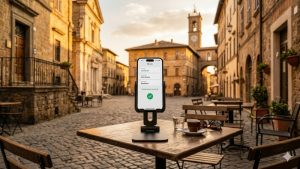
You’re sitting in a café in Barcelona, trying to check your bank account before heading to a museum. You connect to the café’s open Wi-Fi, log in, and go about your day. What you might not realize is that open networks like these are a playground for anyone looking to intercept your data — passwords, banking details, personal messages. Finding the best VPN for travel before your next trip is one of the simplest and most effective steps you can take to stay safe, connected, and in control while you’re abroad.
Whether you’re a digital nomad hopping between countries, a family on holiday, or a business traveler connecting from hotel rooms and airport lounges, a VPN is an essential item on your packing list — right alongside your passport and charger. In this guide, we’ll walk you through exactly why travelers need a VPN, what features matter most on the road, and which providers are the strongest choices for travel in 2026.
Why You Need the Best VPN for Travel
When you’re at home, you probably connect to a Wi-Fi network you trust — your own router, secured with a password only you and your family know. When you travel, that level of trust disappears almost entirely. You rely on hotel Wi-Fi, airport networks, coffee shop hotspots, and co-working spaces. Every one of these is a potential vulnerability.
Public Wi-Fi Risks Are Real
Public Wi-Fi networks are often unencrypted, meaning data sent over them can be intercepted by others on the same network. This type of attack — sometimes called a “man-in-the-middle” attack — allows someone to position themselves between your device and the network to capture information. A VPN encrypts your internet traffic, creating a secure tunnel between your device and the VPN server. Even if someone intercepts your data, all they see is scrambled, unreadable information.
This matters especially for travelers who frequently access sensitive services on the go: online banking, work email, cloud storage, or booking platforms where credit card numbers are entered.
Accessing Your Content from Anywhere
One of the most common frustrations travelers face is discovering that the streaming services, news sites, or apps they use daily at home don’t work the same way abroad. Many online services restrict content based on your location, using your IP address to determine where you are. When you connect to a VPN server in your home country, websites and apps see the VPN server’s IP address instead of your actual one, which can help you access content as if you were still at home.
That said, it’s worth noting that some streaming platforms actively try to detect and block VPN connections, so results can vary. Not every VPN works reliably with every service, which is one reason choosing the right provider matters.
Navigating Internet Restrictions Abroad
Some countries impose restrictions on which websites and services are accessible. China, for example, blocks access to Google, WhatsApp, Instagram, and many Western news sites behind what’s commonly called the Great Firewall. Other countries may restrict VoIP services like Skype or FaceTime, or limit access to certain social media platforms.
A VPN can help you bypass these restrictions, but this comes with an important caveat: laws around VPN use and internet access vary significantly by country. In some places, using a VPN is perfectly legal. In others, it exists in a legal gray area, and in a few, it may be restricted or regulated. We’ll discuss this in more detail below. Always research the laws of your destination before you travel.
Key Takeaway: A travel VPN protects you on three fronts — it secures your data on public Wi-Fi, helps you access your usual content abroad, and can help you get around internet restrictions in certain countries. Set it up before you leave home, not after you arrive.
Key Features to Look for in a VPN for Travelers
Not all VPNs are created equal, and what works fine for casual browsing at home might fall short when you’re relying on it abroad. Here are the features that matter most when choosing a VPN for travelers.
A Large Server Network
The number and geographic spread of a VPN’s servers directly affects your experience as a traveler. A provider with servers in many countries gives you more options for connecting — whether you want a server in your home country for familiar content, or a nearby server for faster speeds at your destination. Look for providers with servers in at least 60 countries.
Strong Encryption and Security Protocols
At a minimum, your travel VPN should use AES-256 encryption — the same standard used by governments and banks. AES stands for Advanced Encryption Standard, and 256 refers to the key length. In plain terms, it’s extremely difficult to crack.
You should also look for modern protocols like WireGuard or OpenVPN. A protocol is essentially the set of rules that governs how your data travels through the VPN tunnel. WireGuard is newer and generally offers better speeds, while OpenVPN is a well-established and highly trusted option. Many top providers offer both and let you choose.
A Kill Switch
A kill switch is a feature that immediately cuts your internet connection if the VPN drops unexpectedly. Without it, your device could revert to an unprotected connection without you noticing, exposing your real IP address and data. This is particularly important for travelers who rely on unstable connections in hotels or public spaces. Make sure your chosen VPN has a kill switch and that it’s turned on.
Multiple Simultaneous Connections
When you travel, you probably carry more than one device — a phone, a laptop, maybe a tablet. You might also be traveling with family. The number of devices you can protect simultaneously with a single VPN subscription varies by provider. NordVPN supports up to 10 simultaneous connections, ExpressVPN’s Pro plan supports up to 14, and Surfshark offers unlimited simultaneous connections. If you’re traveling with a group, this feature can make a real financial difference.
Obfuscation Technology
In countries that actively block VPN traffic, standard VPN connections may not work. Obfuscation (sometimes called “stealth mode” or “camouflage”) disguises your VPN traffic to make it look like regular internet traffic. This is especially critical if you’re traveling to China, Russia, Iran, or other countries known for deep packet inspection — a technique that allows internet service providers and governments to analyze and filter traffic.
Reliable Speeds
All VPNs slow your connection somewhat because your traffic is being encrypted and routed through an additional server. The best travel VPNs minimize this slowdown so you can still video call family, stream content, or work remotely without constant buffering. Look for providers known for consistent performance, particularly those using the WireGuard protocol.
Easy-to-Use Apps Across Platforms
You don’t want to troubleshoot a complicated app while standing in a foreign airport. The best VPN for travel should have intuitive apps for all major platforms — Windows, macOS, iOS, Android — and ideally make it easy to connect with one tap. Some providers also offer browser extensions for quick, lightweight protection.
Best VPN for Travel in 2026: Top Picks
Based on security, speed, server coverage, and reliability in restricted regions, here are three providers that stand out as strong choices for travelers in 2026.
NordVPN — Best Overall Travel VPN
NordVPN consistently ranks as one of the most well-rounded VPN providers, and it’s a particularly strong choice for travelers. It operates over 6,400 servers across 111 countries, giving you excellent geographic coverage no matter where your itinerary takes you.
- Security: AES-256 encryption, WireGuard (via NordLynx), OpenVPN, and a reliable kill switch on all platforms.
- Obfuscation: NordVPN offers obfuscated servers specifically designed for use in restrictive countries. These are accessible from the app’s settings.
- Simultaneous connections: Up to 10 devices on a single account.
- Speed: Generally excellent, especially on the NordLynx protocol, which is built on WireGuard.
- Extras: Threat Protection feature blocks ads, trackers, and malicious websites — useful when browsing on unfamiliar networks abroad.
NordVPN also has a proven track record with independent security audits, which adds an extra layer of trust. It’s a reliable all-around pick whether you’re connecting from a beach resort in Thailand or a business hotel in Frankfurt.
ExpressVPN — Best for Ease of Use and Speed
ExpressVPN is known for its exceptionally polished apps and consistent speeds. If you prioritize a seamless, frustration-free experience — especially when you’re tired, jet-lagged, and just want things to work — ExpressVPN is hard to beat.
- Security: AES-256 encryption, Lightway protocol (ExpressVPN’s proprietary protocol, comparable to WireGuard in speed), and a network lock (kill switch).
- Server network: Servers in 105 countries, covering a wide range of destinations.
- Simultaneous connections: The Pro plan supports up to 14 simultaneous connections, making it suitable for families or travelers with multiple devices.
- Restrictive countries: ExpressVPN has a long-standing reputation for working in China and other restrictive environments, though no provider can guarantee 100% uptime in these regions.
- Speed: Consistently fast, with minimal impact on browsing, streaming, and video calls.
ExpressVPN tends to be priced at the higher end of the market, but many travelers find the reliability and ease of use worth the premium, especially when connectivity is critical.
Surfshark — Best Budget Option for Travel
Surfshark offers an impressive feature set at a lower price point than most competitors, making it an attractive choice for budget-conscious travelers or those traveling in groups.
- Security: AES-256 encryption, WireGuard support, kill switch, and a CleanWeb feature that blocks ads and malware.
- Server network: Servers in 100+ countries.
- Simultaneous connections: Unlimited — meaning you can protect every device in your travel party on a single subscription.
- Obfuscation: Surfshark’s Camouflage Mode disguises VPN traffic, and NoBorders Mode automatically detects when you’re in a restrictive region and suggests optimal servers.
- Speed: Solid performance, particularly on the WireGuard protocol.
For a couple or family traveling together, Surfshark’s unlimited connections policy is a genuine standout. There’s no need to count devices or buy a second subscription.
Why You Should Set Up Your VPN Before You Travel
This might be the single most important piece of advice in this entire article: download, install, and test your VPN before you leave home. This isn’t just a convenience tip — in some situations, it’s essential.
The China Problem (and Similar Restrictions)
If you’re traveling to China, you may not be able to download a VPN app once you arrive. The Google Play Store is blocked in China, and VPN apps are often removed from the Chinese version of Apple’s App Store. VPN provider websites may also be inaccessible. If you haven’t installed your VPN before you land, you could find yourself without any way to get one.
The same principle applies to other countries with significant internet restrictions, including Russia, Iran, and Turkmenistan. Even in countries with less severe restrictions, downloading a large app over slow hotel Wi-Fi is frustrating. Do it at home on your reliable connection.
Pre-Travel VPN Setup Checklist
Here’s a simple checklist to follow before your trip:
- Subscribe to a VPN provider — choose one with strong performance in your destination country.
- Download the app on all your devices — phone, laptop, tablet. Don’t forget to log in.
- Turn on the kill switch — check the settings and make sure this feature is active.
- Test the connection — connect to a server in the country you’re visiting, and also to a server in your home country. Make sure both work.
- Enable obfuscation if needed — if you’re heading to a country with VPN restrictions, turn on obfuscated servers or stealth mode before you go.
- Save offline support resources — screenshot or download your VPN provider’s troubleshooting guide. If the provider’s website is blocked at your destination, you won’t be able to access their help pages.
- Note your account credentials somewhere safe — if you get logged out, you need to be able to log back in without relying on email access that might also be restricted.
Traveling to China? Install your VPN, enable obfuscated servers, and test the connection before your flight. Once you’re behind the Great Firewall, downloading or setting up a VPN becomes significantly harder — and in some cases, impossible. This applies to similar destinations like Russia and Iran as well.
VPN for Travelers: Tips for Staying Connected Abroad
Beyond just having a VPN installed, there are some practical habits that make a real difference to your security and connectivity on the road.
Always Use Your VPN on Public Wi-Fi
This should become as automatic as putting on your seatbelt. Hotel Wi-Fi, airport lounges, train station networks, restaurant hotspots — turn on your VPN before doing anything else. Many VPN apps have an “auto-connect” feature that activates the VPN whenever you join a new Wi-Fi network. Turn this on and forget about it.
Choose the Right Server for the Task
If you want to access content from home — your usual streaming library, online banking that flags foreign logins — connect to a server in your home country. If you want the fastest speeds for general browsing at your destination, connect to a server nearby. Understanding this simple distinction will save you a lot of frustration.
Keep Your VPN App Updated
VPN providers regularly push updates that improve performance, fix bugs, and — critically — adapt their obfuscation methods to stay ahead of government blocks. Before a long trip, make sure your app is up to date. If you’ll be in a restrictive country for an extended period, update whenever you can (for example, during a layover in a less restrictive country).
Have a Backup Plan
No VPN works perfectly in every location, every time. If you’re traveling to a country with heavy internet censorship, consider having a second VPN installed as a backup. Some travelers also use Shadowsocks or other proxy tools as an additional fallback, though these require more technical knowledge to set up.
Can You Use a Free VPN for Traveling?
It’s a fair question — and the short answer is that free VPNs are generally not suitable for travel. Here’s why.
Most free VPNs impose data caps, typically ranging from 2GB to 10GB per month as of 2026. That might cover light email checking, but it won’t last long if you’re using maps, making video calls, or streaming anything. Once your data runs out, you’re unprotected.
Beyond data caps, free VPNs often have limited server networks — sometimes just a handful of countries — which reduces your ability to access content from specific regions. Many lack the advanced features travelers need, like obfuscation for restrictive countries or a reliable kill switch.
There are also privacy concerns. Some free VPN providers monetize their services by collecting and selling user data — which defeats the entire purpose of using a VPN in the first place. If you’re going to rely on a VPN for your security while traveling, it’s worth investing in a trustworthy paid provider.
VPN Legality When Traveling: What You Should Know
VPN legality is a topic surrounded by confusion, so let’s be straightforward: in the vast majority of countries, using a VPN is perfectly legal. This includes popular travel destinations across Europe, North America, South America, Southeast Asia, and beyond.
However, some countries have specific regulations. In China, for example, the government requires VPNs to be state-approved, meaning most commercial VPNs are technically unauthorized — though foreign travelers routinely use them. In the UAE, VPN use is legal for all users for lawful purposes. The issue is not VPN use itself, but using a VPN to access prohibited content, which could result in penalties. In Russia, VPNs that haven’t registered with the government are officially banned, though enforcement against individual users varies.
The key principle is this: a VPN is a security tool, and using it for legitimate purposes — protecting your data, accessing your own accounts — is legal in most places. However, a VPN does not make illegal activity legal. If something is against the law in a particular country, doing it through a VPN doesn’t change that.
Always check the current laws of your specific destination before traveling. Regulations can change, and what applies in one country may not apply in another. When in doubt, consult official government travel advisories or legal resources.
Travel VPN 2026: What’s New This Year
The VPN industry continues to evolve, and a few trends in 2026 are especially relevant for travelers.
Improved protocol performance: WireGuard and proprietary protocols like NordLynx and Lightway have matured significantly. Connections are faster and more stable than ever, even on congested hotel networks. This makes activities like video conferencing and streaming more viable through a VPN than in previous years.
Better obfuscation technology: As countries like China and Russia continue to refine their VPN detection methods, major providers have responded with more sophisticated obfuscation. The cat-and-mouse game continues, but top-tier VPNs are generally staying ahead.
Wider server coverage: All three providers mentioned in this guide have expanded their server networks over the past year, adding locations in regions that were previously underserved. This is good news for travelers heading to less common destinations in Africa, Central Asia, and the Pacific.
eSIM and VPN bundles: Some VPN providers have started offering bundled travel eSIM services alongside their VPN subscriptions. This can simplify connectivity abroad by giving you both mobile data and VPN protection from a single provider, though these services are still relatively new.
Frequently Asked Questions About VPNs for Travel
Do I really need a VPN when traveling?
While it’s not legally required, a VPN is strongly recommended for anyone traveling abroad. Public Wi-Fi networks in hotels, airports, and cafés are common targets for data interception. A VPN encrypts your connection, protecting sensitive information like passwords and banking details. It also helps you access content from your home country and can bypass internet restrictions in certain destinations.
Should I install my VPN before or after I arrive at my destination?
Always install and set up your VPN before you leave. In some countries — particularly China, Russia, and Iran — VPN provider websites and app stores may be blocked, making it extremely difficult or impossible to download a VPN after arrival. Even in countries without restrictions, setting up at home on a fast, reliable connection is much easier than doing it over slow hotel Wi-Fi.
Will a VPN slow down my internet while traveling?
A VPN will add some overhead to your connection because it encrypts your data and routes it through an additional server. However, with modern protocols like WireGuard, the speed reduction is usually minimal — often barely noticeable for browsing, email, and social media. For the best speeds, connect to a VPN server that’s geographically close to your current location. If you’re already on a slow connection (like budget hotel Wi-Fi), the slowdown may be more noticeable.
Can I use a VPN to access my bank account from abroad?
Yes, and this is actually one of the best use cases for a travel VPN. Many banks flag or block logins from foreign IP addresses as a security measure. By connecting to a VPN server in your home country, your bank sees a familiar IP address, which can prevent these security lockouts. That said, some banks also detect VPN usage and may still flag the activity, so it’s wise to notify your bank of your travel dates regardless.
Is it legal to use a VPN while traveling?
In the vast majority of countries, using a VPN is completely legal. However, some countries regulate or restrict VPN use. In the UAE, for example, VPN use is legal for lawful purposes, but using one to access prohibited content could lead to penalties. In China and Russia, the regulations are more complex. VPN legality can change, so always check the current laws of your destination country before traveling. A VPN doesn’t make illegal activities legal — it’s a security tool, not a legal shield.
How many devices can I protect with one VPN subscription while traveling?
This depends on the provider. NordVPN allows up to 10 simultaneous connections, ExpressVPN’s Pro plan supports up to 14, and Surfshark offers unlimited connections. If you’re traveling solo, almost any provider will cover your devices. If you’re traveling with family or a group, Surfshark’s unlimited policy or ExpressVPN’s generous 14-device allowance may be the most practical and cost-effective options.
Conclusion: Choose the Best VPN for Travel and Set It Up Today
Traveling abroad opens up incredible experiences, but it also exposes you to digital risks you don’t face at home. Unsecured public Wi-Fi, geo-restricted content, and government internet censorship are all real challenges that a good VPN can help you navigate. The best VPN for travel is one that combines strong security, reliable speeds, broad server coverage, and — if you’re heading somewhere with internet restrictions — effective obfuscation technology.
NordVPN, ExpressVPN, and Surfshark are all strong contenders in 2026, each with distinct advantages depending on your priorities and budget. Whichever you choose, the most important step is the simplest: set it up before you go. Download the apps, test the connections, enable the kill switch, and walk onto that plane knowing your digital life is protected.
Traveling soon and want to compare VPN providers in more detail? Check out our complete guide to the best VPN services in 2026 for in-depth reviews, speed tests, and pricing comparisons.
“`